
jusqu'à 50 000€ la tour ^^
c'est qu'une carte mère mais ça claque sévère et niveau spec c'est du lourd !
AMD TR5 socket supports up to 96-core CPUs
CPU and memory overclocking: Support for up to 1TB ECC R-DIMM DDR5
Robust power and thermal design: 36 power stages with two 8-pin power connectors chipset and M.2 heatsinks, and M.2 thermal pad.
Ultrafast connectivity: three PCIe® 5.0 x16 slots,
10 Gb & 2.5 Gb LAN ports,
three M.2 slots,
front and rear USB 20Gbps Type-C®
SlimSAS NVMe support.
Server-grade IPMI remote management: hardware and software support for ASUS IPMI expansion cards, plus ASUS Control Center Express software for real-time monitoring and management
mouarf
des coupes dans les effectifs GPU d'AMD :(
Pas toutes je pense mais c'est quand même top !
Il faut tabler sur des hausses d’IPC d’au moins 10 % à chaque fois.
https://www.techpowerup.com/review/asus-radeon-rx-7700-xt-tuf/32.html
https://www.techpowerup.com/review/sapphire-radeon-rx-7800-xt-nitro/32.html
plutôt pas mal, la 7800XT est à préférer.
"rapport qualité/prix correct
O/C potentiel
https://videocardz.com/newz/amd-announces-radeon-rx-7800-xt-16gb-and-rx-7700-xt-12gb-graphics-cards
AMD RX 7800 XT will launch at $499 in the US and €549 in Europe.
The RX 7700 XT will cost $449/€489.
Both cards will be available on September 6th
Pros
+
good performance (mais zen3)
+
over 13 hours of battery life
+
great upgradeability & repairability
+
bright Low Power screen
+
good input devices & TrackPoint
+
wide port selection including RJ45
+
more affordable than other ThinkPads
+
upgradeable WiFi 6E card
+
WWAN ready
Cons
no Ryzen 7040 (zen4)
no DDR5, PCIe 4.0 or USB4
single channel RAM ex factory
M.2 2242 SSD not ideal for upgradeability
coil whine
slow screen response times
16:9 aspect ratio
the AMD EPYC 9754 is the flagship part with 128 cores and 256 threads at $11,900
The primary change for Zen 4c cores from Zen 4 is a halving of L3 cache.
The AMD EPYC 9754 is showing performance ~3x a 128-core Arm competitor at 1.5x the power.
An AMD EPYC 9754 is often twice the performance of 2019’s AMD EPYC 7002 “Rome” 64-core parts.
On most non-HPC-focused workloads, expect the AMD EPYC 9754 to be 15-20% faster than the AMD EPYC 9654. That is not a straight 33% as we would expect due to the core count increase, but AMD is getting scaling from the increased core count even with a drastically reduced L3 cache size.
AMD seems to have figured out an elegant way to reduce turbo clock jitter, especially at maximum load. That helps a lot with SLA on a loaded system.
Cloud-native processors will make up a huge segment of the market.
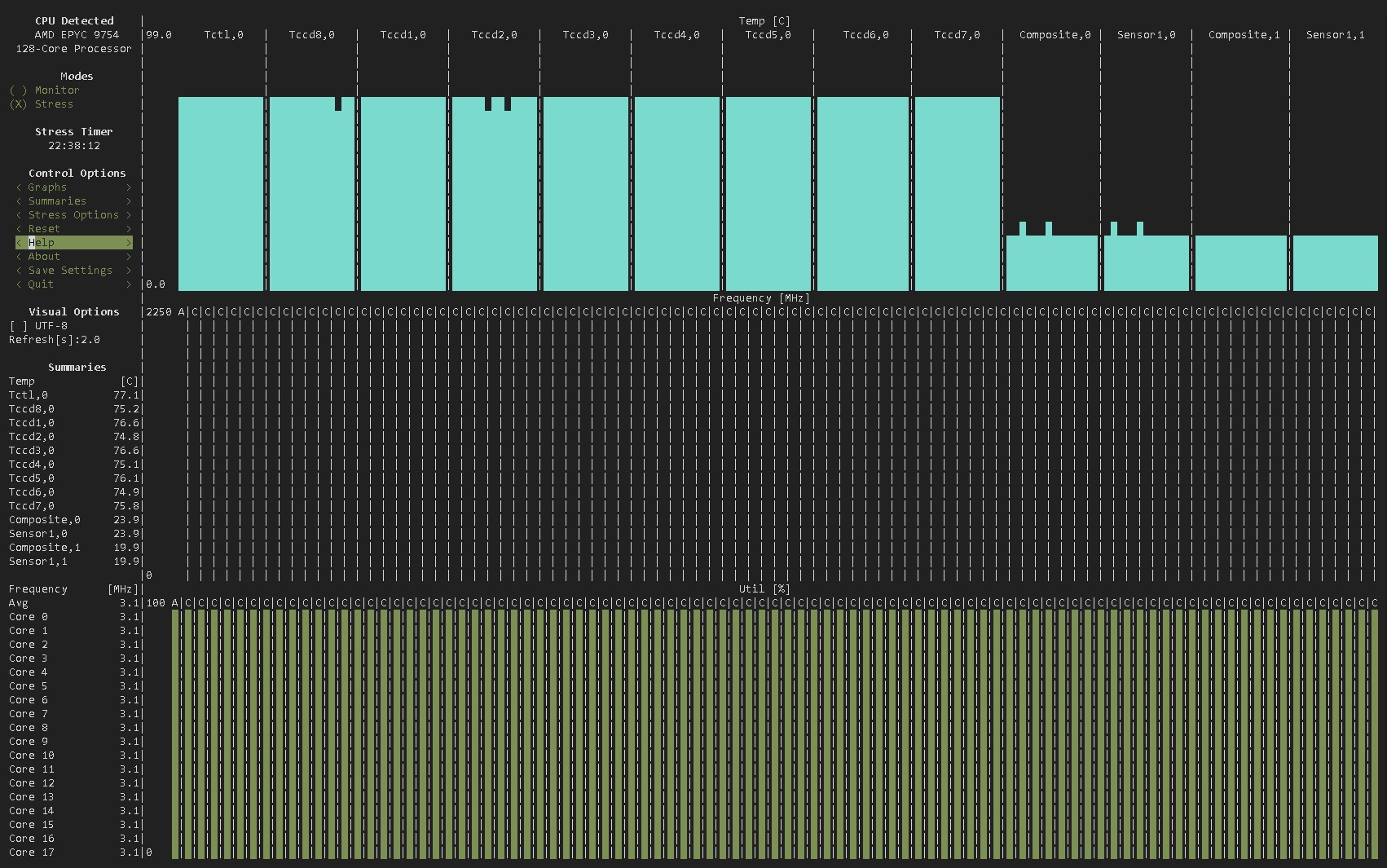
cette image avec tout ces cœurs ^^ :
https://www.servethehome.com/wp-content/uploads/2023/07/AMD-EPYC-9754-Stress-for-CPU-Frequency-22.5hr-Stress.jpg
Points positifs
très hautes performances
excellent clavier à long débattement
fonctionnement silencieux et frais au bureau
autonomie de la batterie utilisable
deux emplacements SSD, RJ45 et caméra 1 080p
RAM extensible (1 emplacement)
écran IPS mat et lumineux
relativement bon marché
robuste
(5825U par contre par le dernier)
Points négatifs
pas d'avancées significatives
~60% sRGB à l'UGS testée + 16:9
très sensible aux empreintes digitales
poids et dimensions
pas de charge rapide
pas de WWAN
USB 2.0
(au prix du cache L3 plus petit)